What Is the Most Accurate Medical Drama?
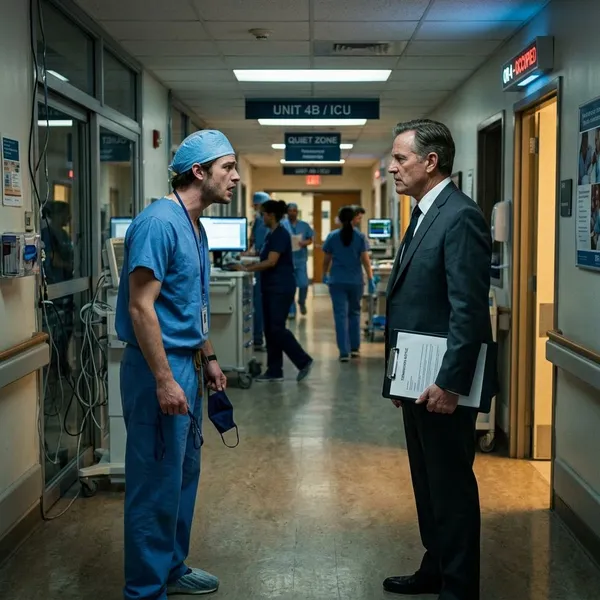
If you want the most accurate medical drama for clinical realism, The Pitt is the strongest pick here, especially if you care about emergency department pressure, teamwork, and decisions made with incomplete information. It is not "real life on camera," because any drama compresses time, but it gets the working logic of hospital care right more often than most. For shorter medical dramas, the better question is whether they simplify honestly or turn medicine into instant certainty.
Why The Pitt Sets a Strong Realism Benchmark
The Pitt works because it treats emergency medicine as a crowded system, not a stage for one brilliant doctor. The tension comes from triage, handoffs, interruptions, worried families, limited beds, and staff making judgment calls before every answer is available.
Medical consultants shape clinical details
Medical consultants are useful when they affect what characters do, not just what they say. In The Pitt, realism shows up in bedside priorities, equipment use, task delegation, and the way staff talk while several problems are happening at once.
The small details matter. A believable handoff, a nurse catching a change, or a doctor admitting uncertainty can do more for accuracy than a dramatic procedure filmed from three angles.
Teamwork reflects emergency department practice
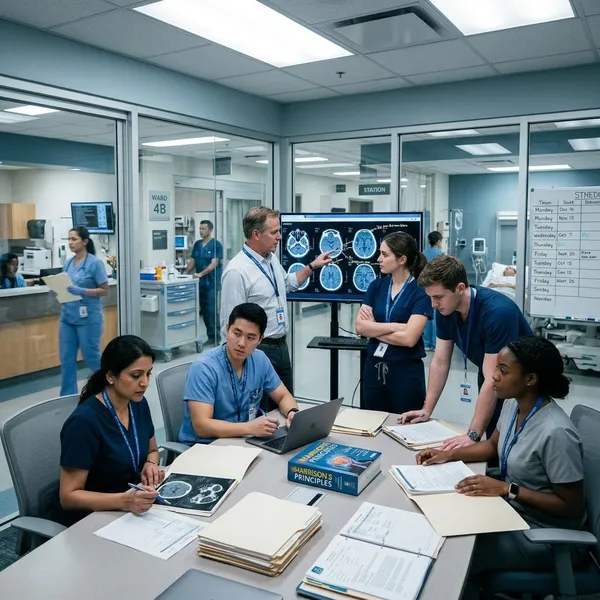
The show's best realism comes from making care look shared. One person may lead a decision, but others notice changes, question orders, handle logistics, calm relatives, or prepare the next step. That is much closer to how emergency departments function than the familiar TV pattern where one doctor diagnoses, treats, counsels, and saves everyone alone.
Dramatic pacing still compresses reality
The Pitt is still built for television, so labs, imaging, conversations, and turning points often happen faster and cleaner than they would in a real hospital. That is acceptable when compression removes waiting time; it becomes a problem only when it changes the meaning of care.
A viewer with hospital experience may notice what is missing: long delays, bed searches, documentation, phone calls, and unresolved next steps. A casual viewer may not catch those gaps, but the show usually preserves the bigger truth: emergency care is messy, collaborative, and full of decisions made under pressure.
What Accuracy Means in Medical Short Dramas
Medical short dramas have a harder job because they may have only a few minutes to show symptoms, conflict, diagnosis, treatment, and emotional payoff. They do not need to include every routine step, but they should keep the chain of care understandable.
A short drama feels credible when it gives the viewer enough evidence to understand why a clinician is worried and why a treatment makes sense. It feels misleading when a rare diagnosis appears from nowhere, a risky procedure happens without setup, or a patient recovers as if the crisis never happened.
Procedures match the stated medical problem
A procedure should fit the patient's stated problem. Trauma, chest pain, breathing trouble, stroke-like symptoms, and infection concerns all suggest different priorities, even if a drama only shows the highlights. When a show jumps straight to the most dramatic intervention without a visible reason, the scene may look urgent but feel medically hollow.
Staff roles reflect team-based care
Role accuracy is an easy realism test. Doctors should not perform every task, nurses should not be treated as background decoration, and support staff should not disappear whenever the plot needs speed.
This is not just a technical complaint. Team-based care creates better drama because hierarchy, communication, disagreement, and trust are already built into hospital life.
Diagnoses follow evidence rather than intuition
A sharp clinician may suspect the right diagnosis early, but believable medicine still shows some path from symptoms to decision. A good shortcut is a working diagnosis: the team acts on the most dangerous likely cause while still checking whether the evidence supports it.
Outcomes acknowledge uncertainty and complications
Realistic outcomes do not always need to be tragic, but they should leave room for recovery, follow-up, side effects, disability, fear, or unanswered questions. A patient who is saved in one scene and completely fine in the next can make the entire case feel less truthful, especially after a high-risk event.

Dr. Teddy Bear and Human Connection
Dr. Teddy Bear sits in a different lane from The Pitt. It is less about procedural precision and more about damaged trust, professional regret, and the emotional work of caring for patients in a smaller community setting.
Medical malpractice disrupts a doctor's career
A malpractice event can plausibly change how a doctor works, even when the legal process is simplified for drama. The most believable version is not just public shame or a courtroom scene; it is the quieter change in confidence, documentation, communication, and willingness to ask for help.
For a viewer judging realism, watch whether the mistake has lasting professional consequences. If it becomes only a plot device that disappears after a speech or apology, the story loses weight.
A local clinic challenges established habits
A clinic setting can make the drama feel more everyday than an emergency room. Follow-up visits, chronic problems, missed appointments, family pressure, and limited resources are less flashy, but they are often closer to how many patients actually experience healthcare.
- Stronger realism: progress is gradual and patients do not change overnight.
- Weaker realism: one heartfelt conversation solves medical, financial, and relationship problems at once.
Patients and staff rebuild their relationships
Relationship repair is believable because trust is part of care. A better bedside manner or sincere apology can matter, but the show is more convincing when it also leaves room for accountability, hesitation, and slow rebuilding rather than instant forgiveness.
Medical Rebirth and Fantasy Storytelling
Medical Rebirth should not be judged by the same standard as a grounded emergency drama. Its time-travel premise is fantasy, but it can still say something interesting about experience, regret, hierarchy, and how doctors make different choices after living through failure.
The useful question is whether the hospital behavior remains believable inside the fantasy. If future knowledge turns the lead into someone who is always right and always obeyed, the medical realism collapses. If it forces him to work through evidence, authority, and uncertainty, the story keeps at least one foot on the ground.
A surgeon returns to his residency
The residency setup works because it creates a built-in limit. The character may know more than the people around him, but he still has less authority, needs supervision, and has to convince others with more than confidence. That tension is more realistic than simply making him an unstoppable genius.
Past experience changes his medical decisions
Experience can change medicine in believable ways. A doctor who remembers a missed warning sign might ask one extra question, push for a test sooner, or speak more carefully to a family when the situation is uncertain.
The line to watch is certainty. Better experience should improve judgment, not remove risk. If every hunch becomes correct, the story is no longer exploring medical growth; it is using fantasy to avoid hard decisions.
Time travel drives his second chance
Time travel makes Medical Rebirth entertaining, but it also moves the show away from any serious claim to being the most clinically accurate option. It can still be worth watching for ethical pressure and second-chance storytelling, as long as viewers separate that appeal from medical realism.
Medical Short Drama Details That Need Scrutiny
Short-form medical stories can be fun, but their biggest weakness is often speed. Fast storytelling is fine; false simplicity is the problem. A drama can skip waiting rooms and paperwork without misleading viewers, but it should not skip the reasoning that makes a diagnosis or treatment believable.
Instant diagnoses without supporting tests
A quick suspicion can be realistic; a perfect diagnosis from two symptoms usually is not. Stronger writing shows a clinician acting on a dangerous possibility while still gathering evidence.
For example, if a character has severe chest pain, the scene does not need to show every test. It should still make clear that the team is checking likely causes rather than magically naming one condition because the plot needs a reveal.
Miracle recoveries without lasting consequences
A successful rescue should not erase what just happened. Pain, monitoring, medication changes, fear, rehabilitation, family stress, or follow-up can be acknowledged in seconds, but leaving them out completely makes recovery look unrealistically clean.
Lone doctors replacing entire care teams
The one-doctor-does-everything shortcut is one of the fastest ways to weaken medical realism. Hospitals depend on overlapping roles because patients are safer when more than one person is watching, checking, preparing, and communicating.
This matters even in short dramas. Showing one nurse noticing a change or one pharmacist questioning a medication can make a scene feel more credible without slowing it down much.
Procedures performed without consent or preparation
Consent and preparation are not boring extras; they are part of safe care. In an emergency, explanation may be brief, but a realistic scene should still show that someone is preparing equipment, assigning roles, checking risk, or communicating with the patient or family when possible.
- Acceptable compression: skipping repeated checks while keeping the care logic clear.
- Misleading compression: making invasive treatment look casual, instant, and consequence-free.
- Best quick realism test: ask whether the scene shows why the procedure is needed and what could go wrong.
Conclusion
The Pitt makes the strongest case if your priority is grounded emergency medicine, because it understands that accuracy is built from teamwork, uncertainty, pressure, and consequences rather than dramatic terminology alone. Dr. Teddy Bear is better read as emotional healthcare drama, while Medical Rebirth uses fantasy to explore regret and second chances. For any medical short drama, the simplest rule is still the most useful: trust the shows that preserve the logic of care, and be cautious with the ones that replace it with instant answers.